A B2B website doesn't need a redesign just because it looks a little dated.
In fact, visual age is often the least important reason to rebuild a website.
The bigger question is whether your website still supports the business it represents.
If your positioning has evolved, your audience has changed, your brand has matured, or your marketing team has outgrown the technology behind the site, a redesign may no longer be optional. It may be a business decision.
Redesign is not a visual refresh. It's a way to bring your digital presence back in line with your business.
Here are six signs it may be time to rethink your B2B website.
1. Your positioning has changed
Businesses evolve.
You may have entered new markets, moved upmarket, expanded your offering, changed your ICP, or shifted from selling a product to providing a broader solution.
But your website may still be communicating the story you told three years ago.
This creates a disconnect between the business your company has become and the business your website describes.
For example, your company may now work with enterprise clients, but the website still speaks to small businesses. Or your product may have expanded from a single solution into a broader platform, while the website continues to position it as a standalone tool.
When your positioning changes, updating a few headlines usually isn't enough.
Your positioning affects:
- how the company is presented
- what the website prioritizes
- how services or products are structured
- which audiences get addressed
- what proof is shown
- how visitors move through the site
If the business has changed significantly, the website should reflect that change.
2. Your messaging no longer reflects your value
One of the most common B2B website problems is not bad design.
It's unclear messaging.
A visitor lands on the homepage and still has to figure out:
What do you do?Who is it for?What problem do you solve?Why should I choose you?What should I do next?
B2B products and services are often complex. That makes clarity even more important.
If your website relies on generic statements like "innovative solutions", "digital transformation", or "empowering businesses", visitors may struggle to understand what makes your company relevant to them.
Messaging should make complexity easier to navigate, not add another layer of it.
And when your offering evolves, your messaging needs to evolve with it.
A redesign is often an opportunity to revisit the entire communication system — from the homepage value proposition to service pages, proof points, CTAs, and supporting content.
3. Your UX makes it harder to buy
B2B buyers rarely arrive at a website with a single question.
Different stakeholders need different information.
A CEO may want to understand business value.
A marketing leader may want to know whether the solution fits their goals.
A product or technical stakeholder may need to understand capabilities, integrations, implementation, or security.
If all of these people are forced through the same generic journey, the website creates friction.
Poor UX can look like:
- important information buried several clicks deep
- unclear navigation
- overly complicated page structures
- inconsistent calls to action
- long paths to basic answers
- no clear next step
- content organized around the company's internal structure instead of buyer needs
Good UX reduces the effort required to understand the offer and move forward.
The goal isn't simply to make a website "easy to use."
The goal is to make the path from interest to action clearer.
4. Your website gets traffic — but doesn't convert
Traffic alone doesn't mean a website is working.
You may have strong organic visibility, paid campaigns, social traffic, or referrals — but if visitors don't take the next step, something is wrong.
Look for signals such as:
- high-traffic pages generating few enquiries
- important landing pages with weak engagement
- visitors dropping off before reaching key CTAs
- inconsistent or competing calls to action
- campaigns sending users to generic pages
- forms that create unnecessary friction
- no clear conversion path for different levels of intent
Conversion shouldn't be something added after the design is finished.
It should influence the structure of the website from the beginning.
A high-intent visitor might be ready to book a conversation.
Someone earlier in the buying journey may want to explore a service, read a case study, or understand your approach first.
A good B2B website gives both visitors somewhere to go.
If your website attracts the right people but doesn't help them take the next step, the problem may be structural — not just cosmetic.
5. Your brand has evolved, but your website hasn't
Sometimes the business has matured faster than its digital presence.
Your visual identity may have changed. Your positioning may be more premium. Your target clients may have become larger. Your offering may be more sophisticated.
But your website still looks and feels like the company from several years ago.
This creates a perception gap.
And in B2B, perception matters.
Your website is often one of the first places a potential client encounters your company. It influences whether the business feels credible, relevant, established, and capable of solving a serious problem.
That doesn't mean every B2B website needs to follow the latest design trend.
It means the experience should accurately represent the level of business you're asking customers to trust.
If your brand has moved forward but your website hasn't, the gap becomes part of the customer experience.
6. Your website can't scale with the business
A website can work perfectly well when it launches and become a problem later.
Maybe adding a new page requires a developer.
Maybe your CMS makes simple content changes unnecessarily complicated.
Maybe new landing pages have to be built from scratch.
Maybe analytics and integrations are difficult to maintain.
Or perhaps the website has accumulated so many custom fixes that making one change creates problems somewhere else.
These are not purely technical issues.
They affect how quickly your marketing team can move.
A scalable B2B website should support:
- reusable components and page structures
- efficient content management
- analytics and conversion tracking
- integrations with the wider marketing and sales stack
- SEO and performance requirements
- new campaigns and landing experiences
- future content and functionality
- continuous improvement after launch
Technology should enable the business — not become a constraint around it.
If every website change feels like a project, your infrastructure may have become the bottleneck.
So, does your B2B website actually need a redesign?
Not every problem requires a complete rebuild.
Sometimes a focused UX improvement, messaging update, or technical change is enough.
But when several of these problems appear at the same time, patching the existing website may no longer be the best approach.
Use this as a quick check:
Your website may be ready for a redesign if:
-
Your positioning has changed significantly
-
Your messaging no longer clearly communicates your value
-
Your users struggle to find information or understand what to do next
-
Your website gets traffic but generates fewer conversions than it should
-
Your brand has evolved beyond the current digital experience
-
Your CMS, integrations, or infrastructure slow your team down
-
Adding new content, campaigns, or functionality feels increasingly difficult
The more boxes you check, the more likely the issue isn't one page or one component.
It's the system.
Redesign Is a Business Decision, Not a Visual Refresh
A successful B2B website redesign starts before anyone opens Figma.
It starts with understanding what has changed in the business — and what the website needs to do differently as a result.
That means looking at the full system:
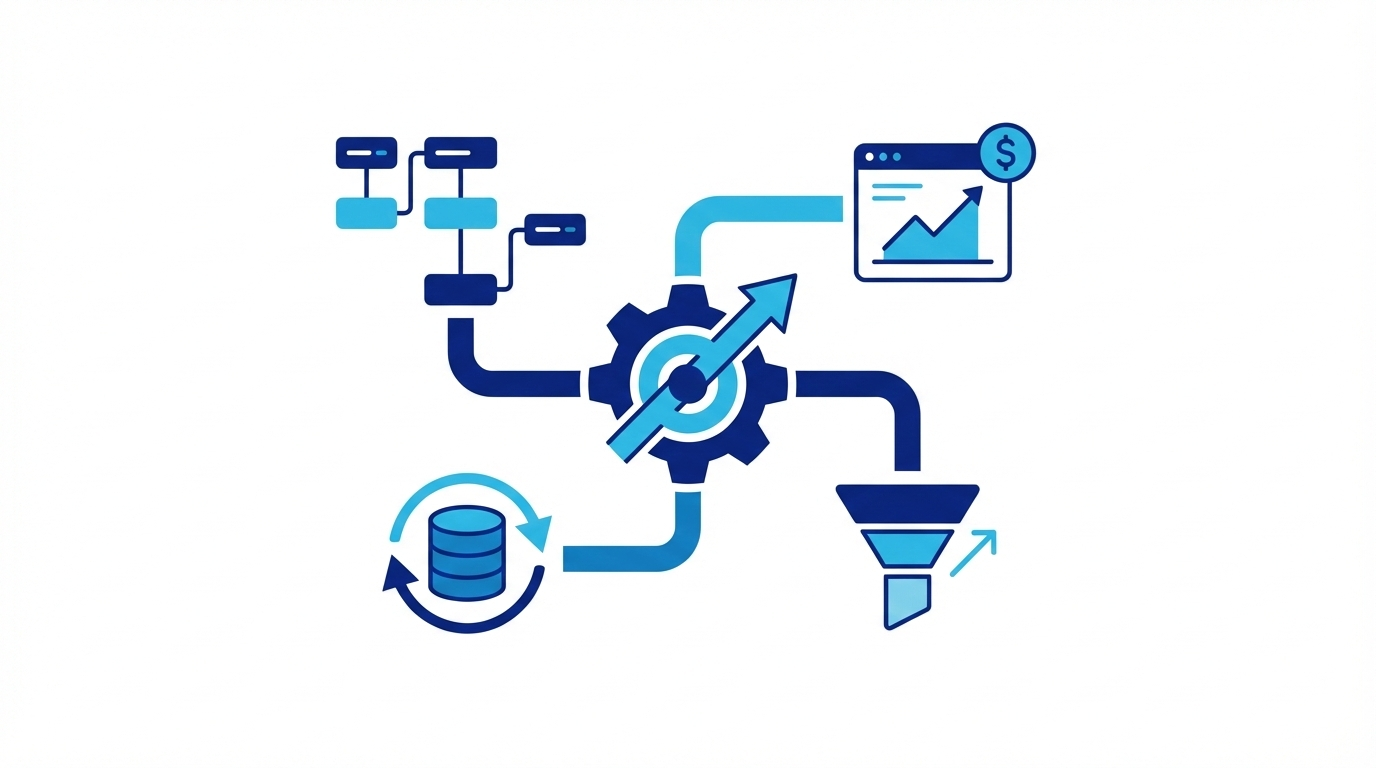
Strategy → Messaging → UX → Design → Conversion → Technology
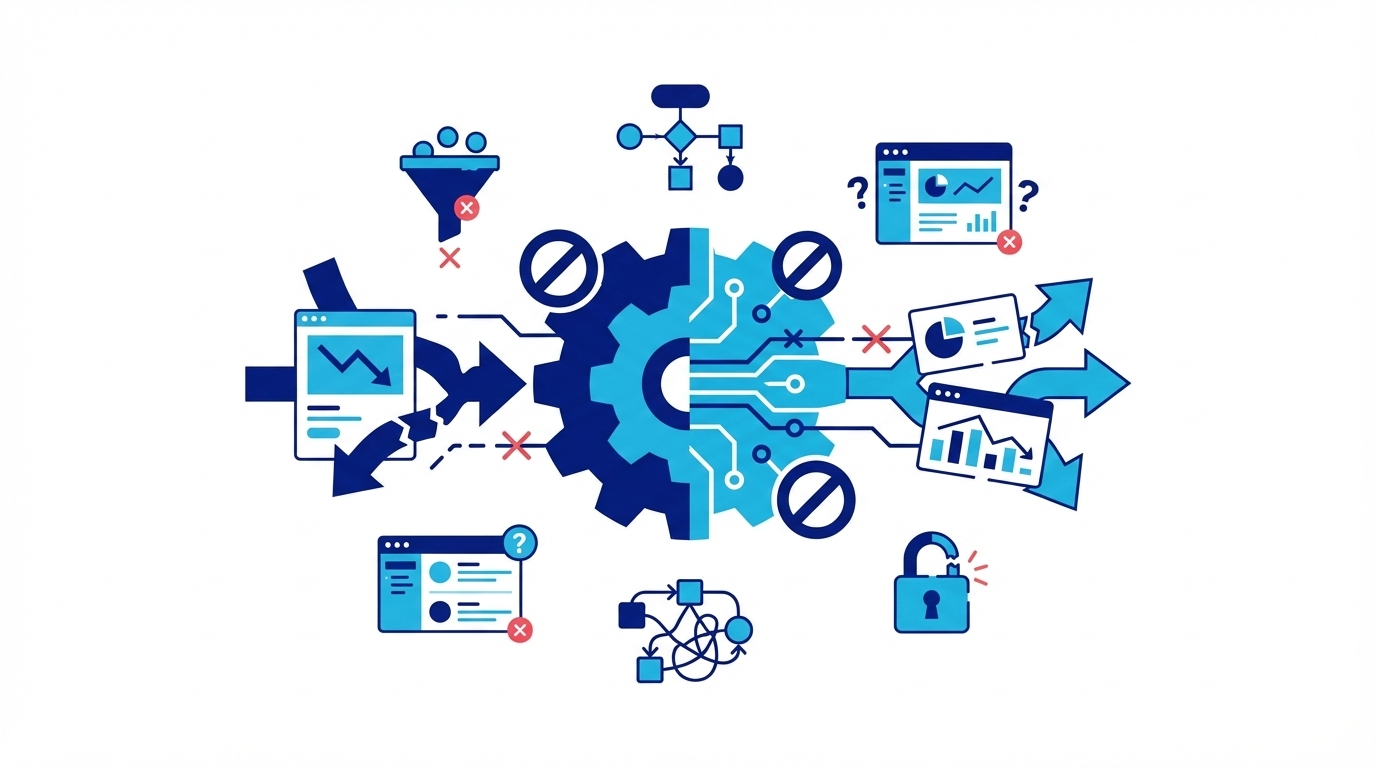
Because changing the visual layer while keeping outdated positioning, unclear messaging, broken user journeys, or limiting technology won't solve the underlying problem.
A redesign should make the website more relevant to the right audience, easier to navigate, clearer to understand, stronger at converting, and easier for the business to evolve.
That's why the right question isn't:
"Does our website look old?"
It's:
"Is our website still helping the business move forward?"
If the answer is no, it may be time to rethink the whole digital experience.
Planning a B2B website redesign? Start with what your business has outgrown — not with what you want the new website to look like.